
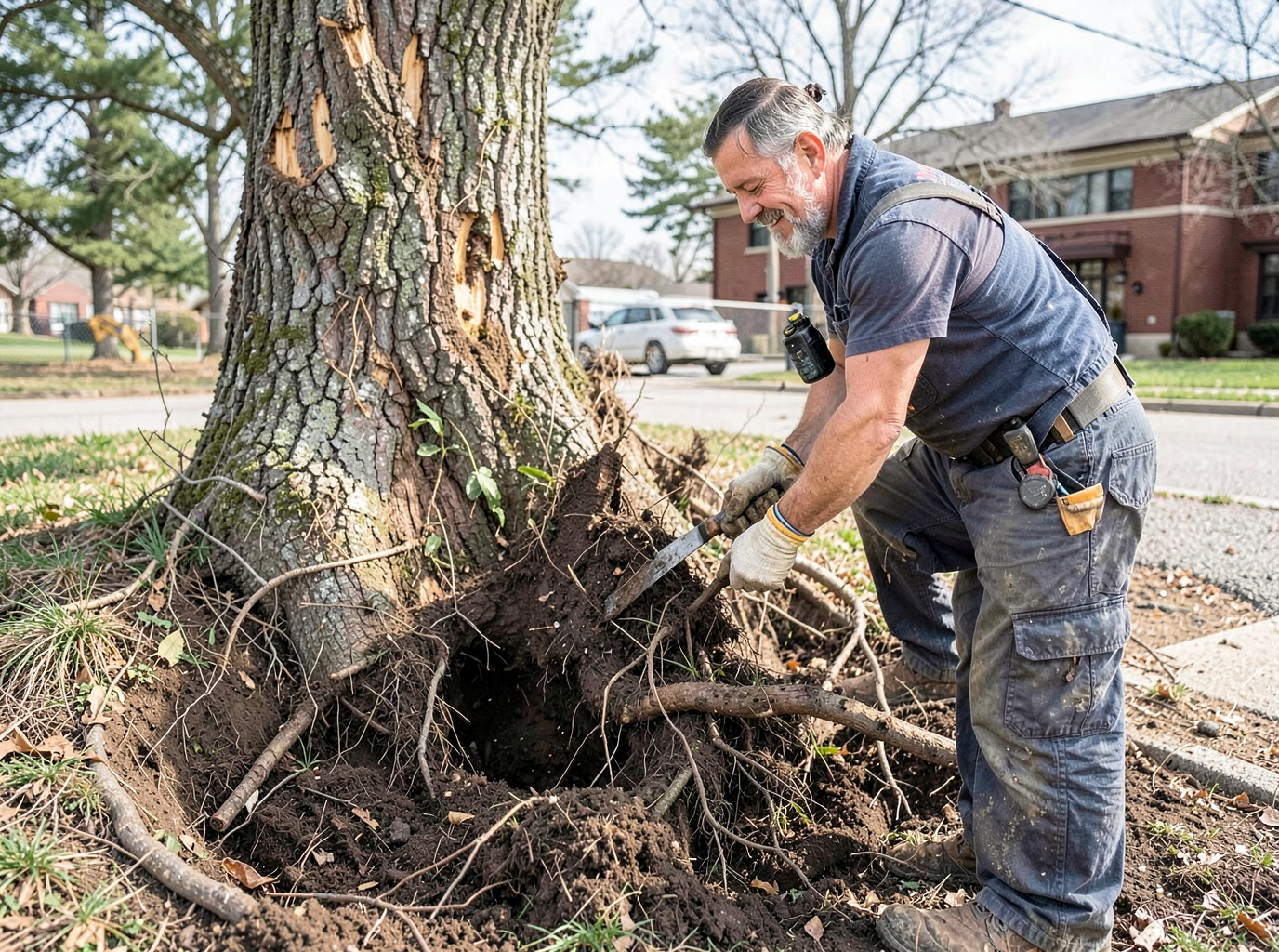
Lenexa’s older neighborhoods like Greystone and Rosewood contain many homes built before 1980 with clay or cast-iron sewer lines that sit close to mature oaks and maples. These roots seek moisture year-round, especially after hot summers dry the soil and cold winters push them deeper toward consistent water sources from household drains. A camera inspection often reveals fine feeder roots entering joints at Sar-Ko-Par Trails Park edges or near Legends Outlets commercial properties that share older infrastructure with nearby residential streets.
In Johnson County the humid continental climate creates predictable cycles: spring rains saturate clay-heavy soils, loosening pipe joints, while winter freezes expand cracks and allow larger roots to follow. Homeowners in City Center frequently report slow drains after Thanksgiving or early spring thaws when roots have had months to grow undisturbed. Mechanical cutting alone rarely solves the issue because regrowth occurs within weeks unless the line is also treated or replaced in problem sections.
We base operations at 10920 Widmer Rd and serve Lenexa plus adjacent Overland Park, Shawnee and Olathe streets where tree cover is dense. Work includes locating the exact intrusion point, cutting roots without damaging pipe walls, and applying targeted treatments that respect local sewer regulations. Homeowners can inspect the line themselves via the camera footage we provide before any further decisions.
Technician insight
In Lenexa the thing that catches most people out with tree root removal is assuming one cutting solves it permanently—our clay soils and freeze-thaw cycles around Rosewood and City Center let roots re-enter the same joints within a single growing season unless the inhibitor is used.
Rosewood Slow Drain After Winter Thaw
Homeowner on a tree-lined street near Sar-Ko-Par Trails Park noticed gurgling toilets after a cold snap. Camera showed maple roots filling a clay joint 18 feet from the cleanout. We cut the roots, jetted the line, and applied foaming treatment; flow returned immediately with no excavation required.
Tree Root Removal Services We Offer
✓Camera Inspection for Root Intrusion
We run a waterproof camera through the line from the cleanout near Lenexa City Hall area homes to pinpoint exact root entry points and pipe condition.
✓Mechanical Root Cutting
Specialized cutting heads remove established roots from clay and cast-iron lines common in Rosewood and Greystone without full excavation.
✓Hydro Jetting After Root Removal
High-pressure water scours remaining root fragments and grease from the pipe walls after initial cutting, restoring full flow in older Johnson County lines.
✓Foaming Root Inhibitor Treatment
We apply EPA-approved foaming herbicides that coat the pipe interior and discourage new root growth for 12–18 months in tree-heavy neighborhoods.
✓Sewer Line Spot Repair
When roots have cracked joints, we excavate only the damaged section near Sar-Ko-Par Trails Park properties and install a new PVC or lined segment.
Tree Root Removal Cost in KS
| Service | Typical Range | What Affects It |
|---|---|---|
| Camera Inspection | $175–$275 | Includes recording; deeper cleanouts in Greystone add time |
| Mechanical Root Cutting | $350–$650 | Single run; multiple laterals or heavy oak roots increase cost |
| Hydro Jetting Add-On | $200–$350 | Often paired with cutting for older clay lines |
| Foaming Root Treatment | $225–$400 | Applied same visit; annual repeat common near parks |
Ranges are typical for KS and confirmed with an exact written quote before any work starts.
How it works
- 1
Schedule and Locate
We confirm access points at your Lenexa address and note any mature trees near the sewer path.
- 2
Camera Assessment
A live camera feed identifies root locations and pipe material before any cutting begins.
- 3
Root Removal
Mechanical cutters or hydro jetting clear the blockage while we monitor progress on screen.
- 4
Treatment and Verification
Foaming inhibitor is applied and a final camera pass confirms clear flow before we leave.
Pricing
Most Lenexa tree root jobs fall into these ranges depending on line depth, tree species and whether spot repair is needed.